Gas Line Repair and Installation in Santa Ana

Leaks found, lines replaced, permits pulled and inspections passed — with a written pressure test on every job.

Santa Ana Gas Line has spent more than 20 years running, repairing and replacing fuel gas piping for homes and businesses in Santa Ana, California. We install new lines to rooms that never had them, find and repair leaks, replace corroded houseline, relight appliances after a shutoff, and pull the permit and stand the inspection that legally belong to the work.

Much of the owner-occupied housing in this city dates from the 1950s through the 1970s, and a large share of it is older still. That matters more for gas than for almost any other trade: piping installed then is Schedule 40 black steel to ASTM A53, and after fifty years in a wall or a wet trench it fails at the threads and the low points rather than in the middle of a run. A house that has been added onto twice is usually also running more appliances than its original pipe was ever sized to carry.

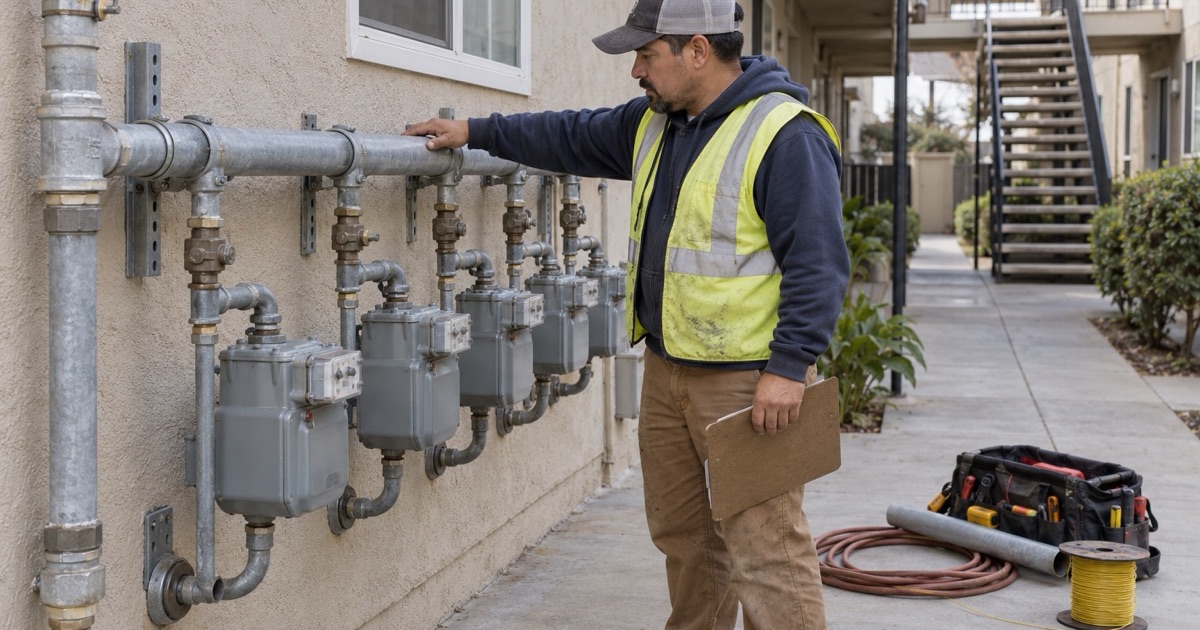
The other thing that catches people out here is ownership. SoCalGas maintains its piping up to the meter, and everything downstream of that meter is yours, including the entire run from a curbside meter back to the house. That single boundary decides who pays for a repair, who is allowed to touch it, and whose contractor pulls the permit.

Get Your Free Quote

Fast response • No obligation

So we can reach you about your request.

So we can send you a confirmation after you submit this inquiry form.

  • Licensed & Insured
  • Same-Day Leak Response
  • Free Written Quotes

What we do

Our Services

Gas line installation, repair and leak detection in Santa Ana

A technician sweeping a handheld combustible gas detector along an exposed pipe run

Gas Leak Detection

Electronic gas leak detection for homes and businesses, indoors and on buried lines, with same-day response.

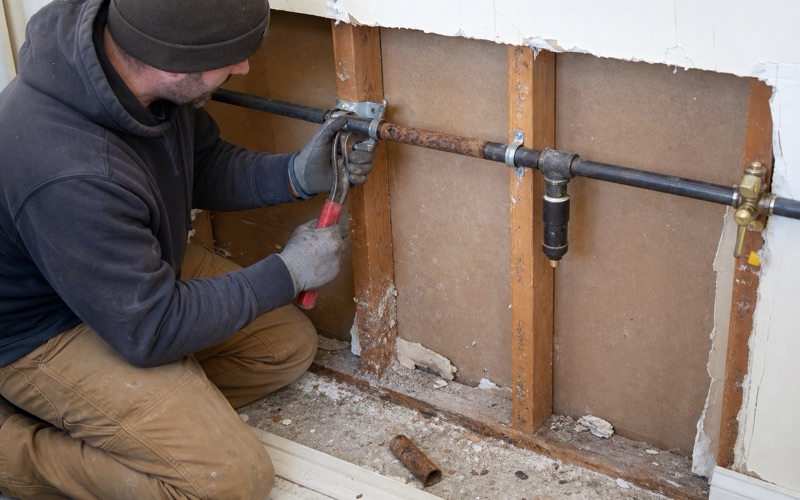
An installer cutting out a corroded section of black steel pipe at an exposed run

Gas Line Repair

Repairs to leaking, corroded and damaged gas piping, with the permit pulled and a written pressure test on completion.

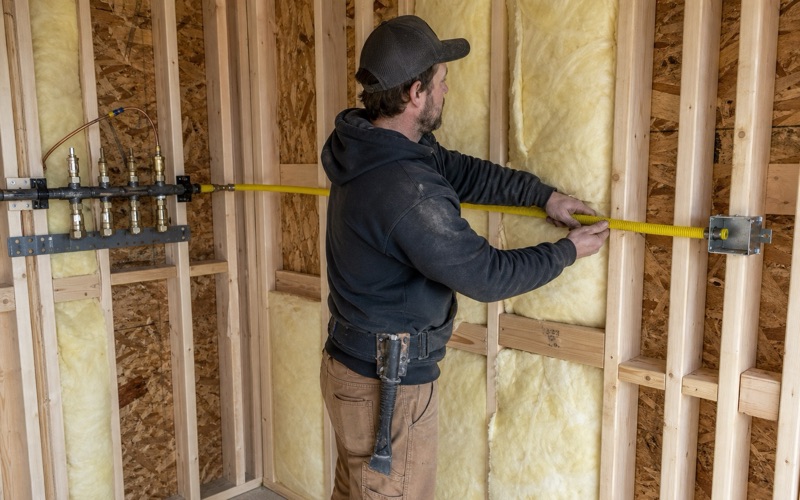
An installer routing new corrugated stainless steel tubing through drilled studs

Gas Line Installation

New gas line installation sized by BTU load, permitted, inspected and pressure tested before it is closed up.

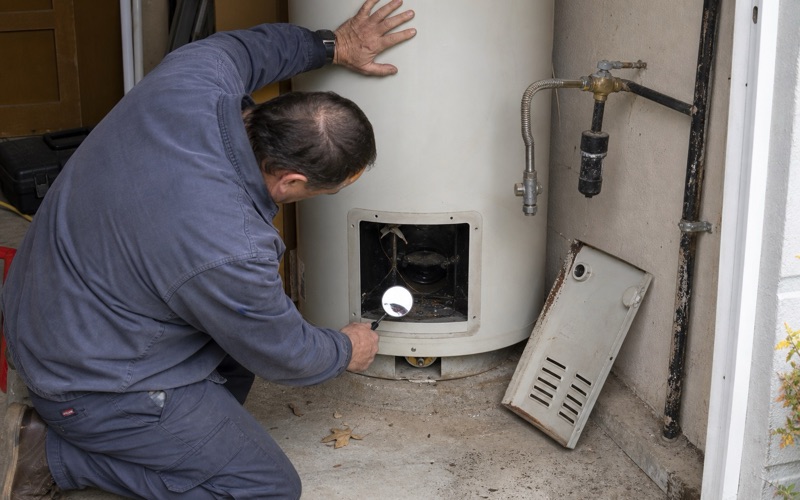
A technician checking the burner of a gas water heater with the access panel open

Pilot Light Relight

Relighting water heaters, furnaces and wall heaters, and diagnosing the supply fault that put the pilot out in the first place.

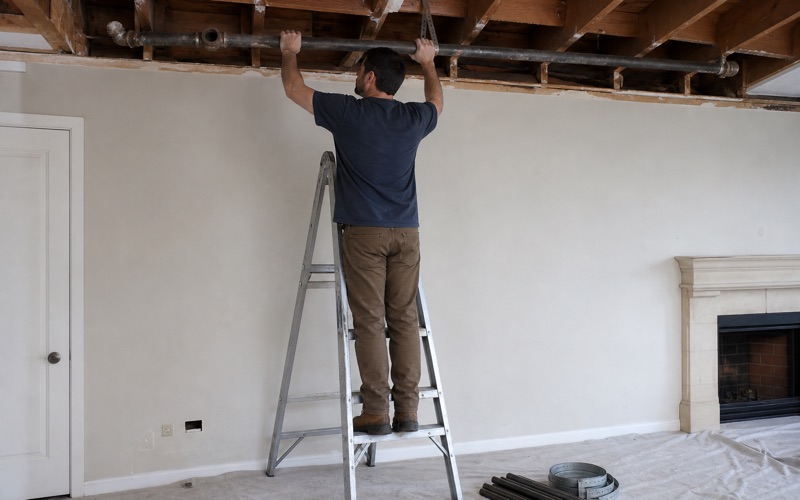
An installer removing original steel gas pipe from an open ceiling during a repipe

Gas Line Replacement

Whole-house repipes and buried line replacement, sized from the connected load and staged around the household.

An inspector and a gas fitter reading a pressure gauge on a test assembly

Gas Line Inspection

Gas piping inspection and pressure testing for sales, rentals, insurance and permit sign-off, with a written result.

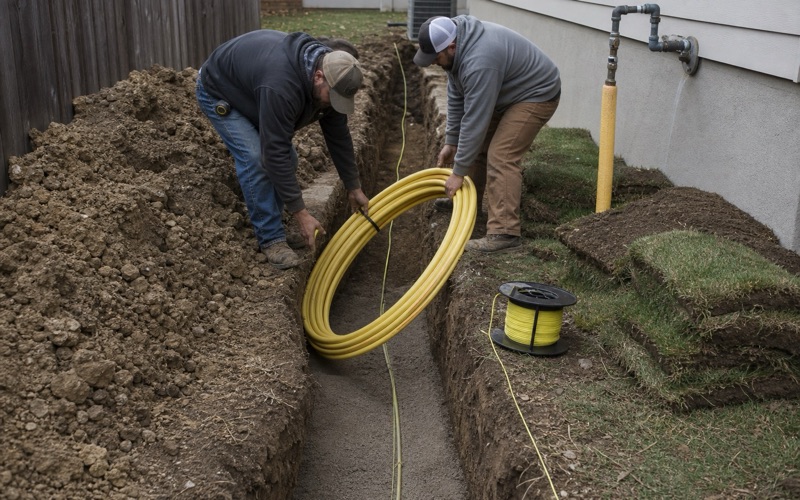
Two workers lowering polyethylene gas pipe into an open trench with tracer wire

Underground Gas Line

Buried gas line installation and replacement to pool heaters, outdoor kitchens, casitas and detached garages.

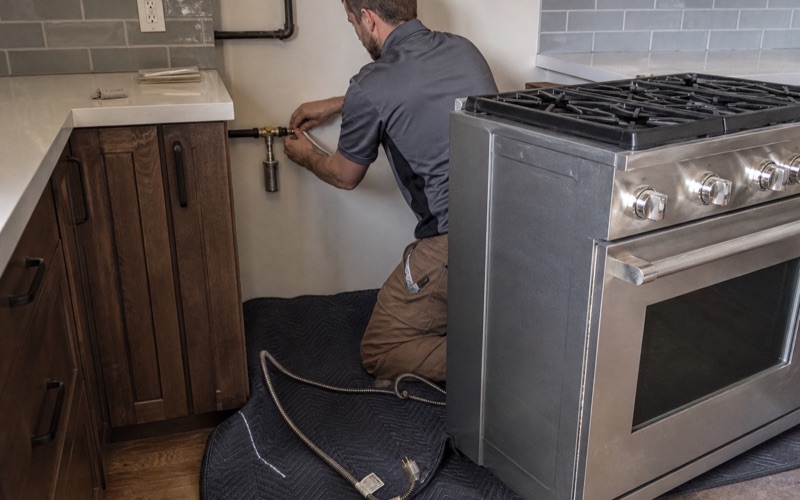
An installer connecting a flexible gas connector behind a pulled-out kitchen range

Appliance Gas Lines

Gas lines and connections for ranges, cooktops, dryers, tankless heaters and fireplaces, sized for the appliance.

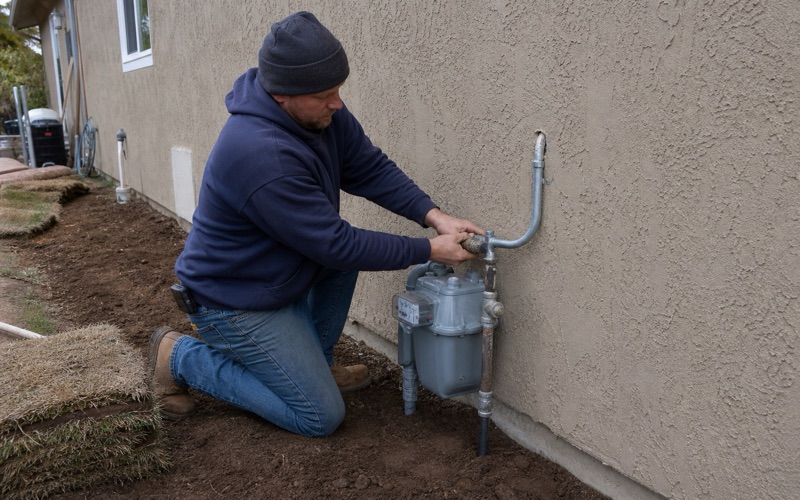
An installer working on the houseline at a relocated meter set assembly

Gas Meter Relocation

Meter relocation and upsizing, with the customer-owned piping and the utility sequencing handled together.

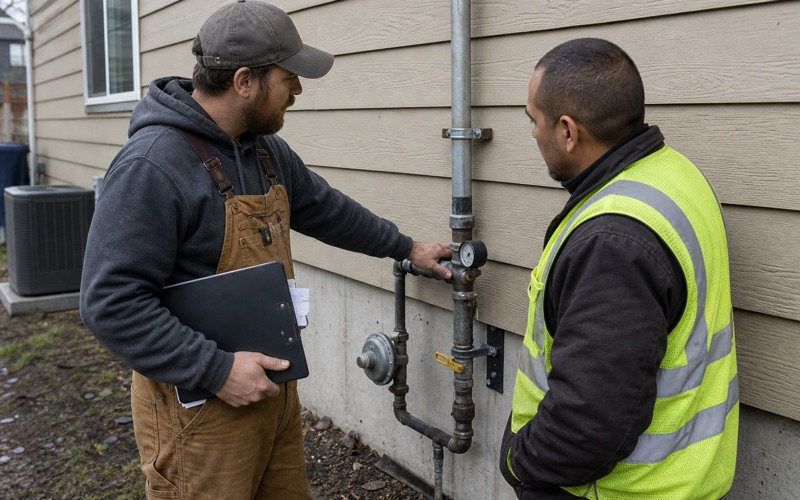
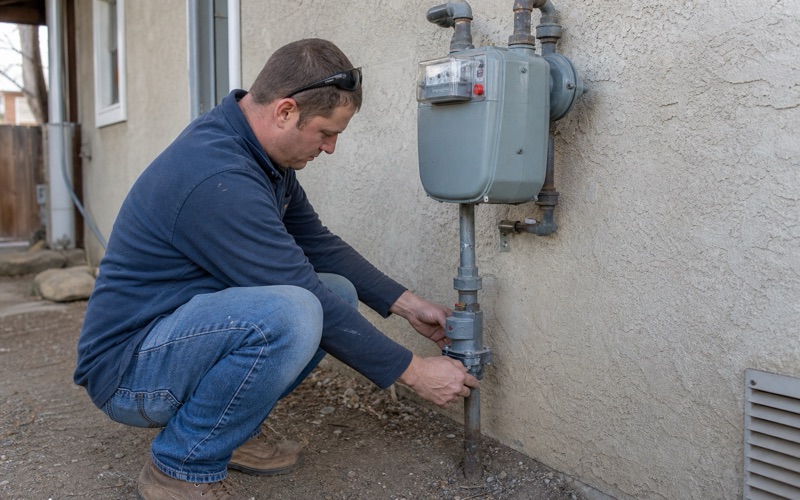
A technician resetting a seismic gas shutoff valve on the riser at a house meter

Seismic Gas Shutoff Valve

Earthquake gas shutoff valve installation, resetting and testing, including telling a tripped valve from a supply fault.

Two Decades on Santa Ana Gas Piping

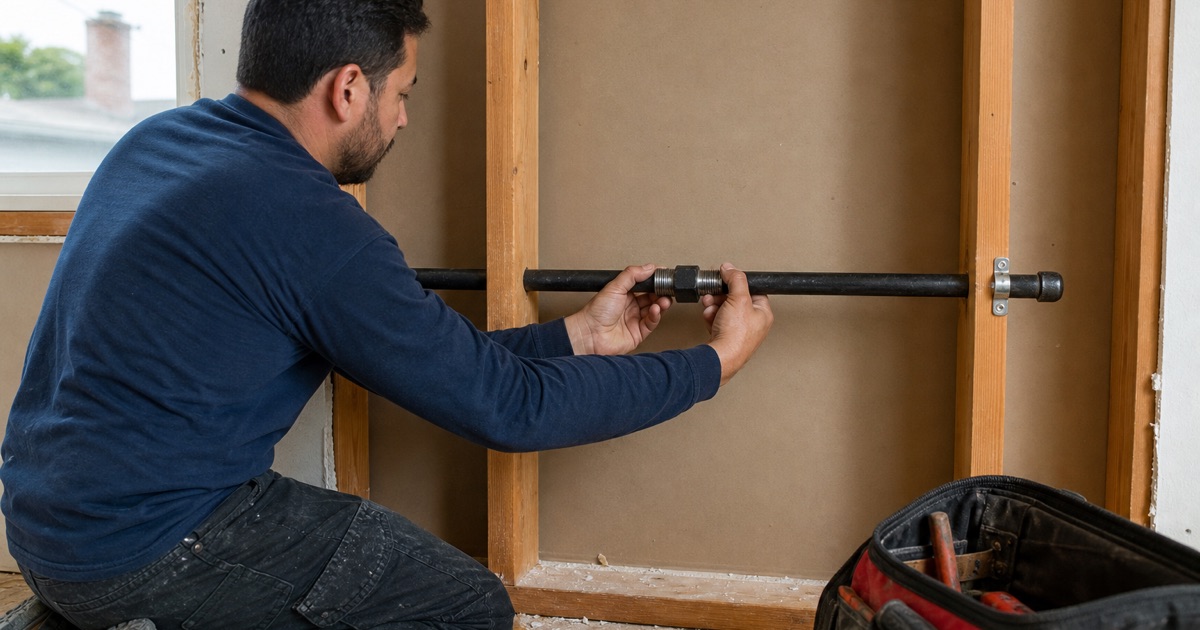
An installer tightening a threaded joint on black steel pipe at an open wall in a Santa Ana home

Twenty Years in One Housing Stock

Twenty-plus years working the same city means we already know what is behind the drywall before we open it. The tract housing that went up here between 1950 and 1979 shares a small number of original piping layouts, and recognizing which one a house has tells us where the corrosion, the undersized branch and the buried splice are going to be.

Why Choose Santa Ana Gas Line

Permit and Inspection Handled Here

Every gas job that alters piping gets its permit pulled by us and its inspection booked by us, under the California Plumbing Code as Santa Ana adopts it in Municipal Code Section 8-290, so the approval is our problem rather than a form left on your kitchen counter. Unpermitted gas work surfaces later at resale, when it is expensive.

Written Pressure Test Every Time

No line we install or repair is closed up without a pressure test, read on a gauge whose range is no more than twice the test pressure and graduated in tenths of a psi, and you keep the written result. A gauge too coarse to resolve a slow drop will pass a line that is leaking, which is why the instrument is specified and not just the test.

Curb Meters and Yard Runs

Many older Santa Ana lots carry a curb-set meter, which makes the whole run from the sidewalk to the house customer-owned pipe rather than the utility’s. We tell you which side of that line a fault sits on before quoting, so nobody pays to replace pipe the gas company would have replaced, and nobody waits on a utility that was never coming.

Private Locating Before We Dig

Every trench is preceded by a locate, and it goes further than an 811 DigAlert ticket does. SoCalGas marks only as far as the meter, so the customer-owned yard run — the one most likely to be hit — is marked by us with our own equipment rather than left to a utility ticket that stops at the boundary.

Same Crew, Same Number Later

The people who quote a job are the people who run the pipe, and no part of it goes to a subcontracted crew. When a line needs attention two years on, the phone reaches somebody who worked on it, rather than a dispatcher reading a file written by a contractor who has since moved on.

Gas Leaks, Safety and Emergencies

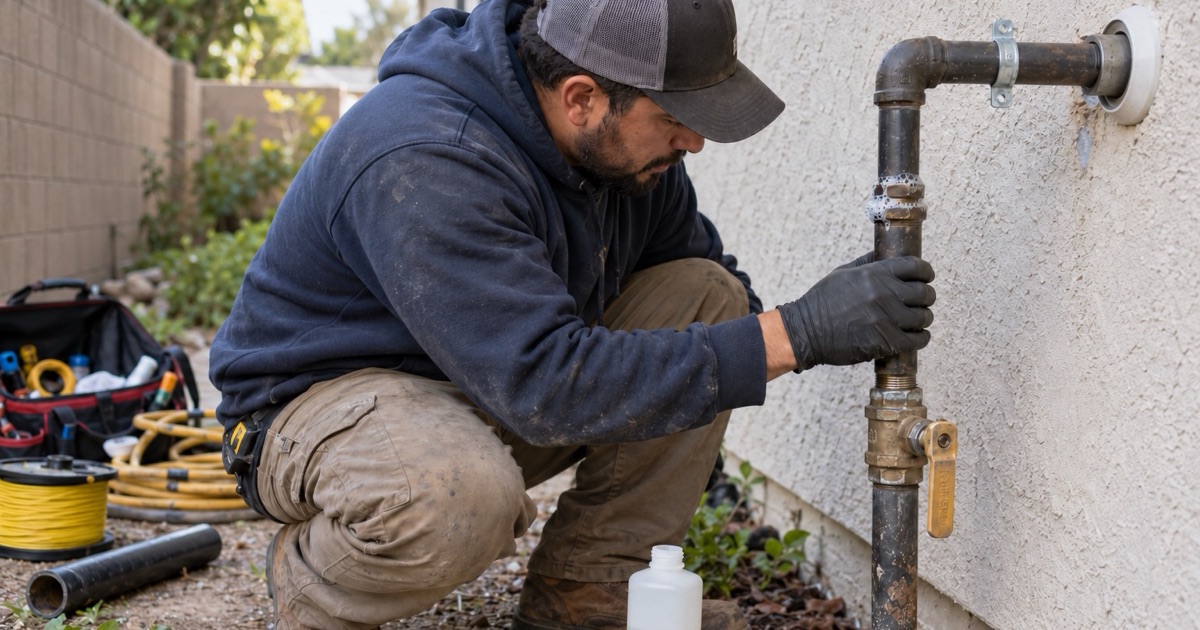
A technician brushing leak solution onto a threaded joint on an exterior gas riser

The First Five Minutes After You Smell Gas

Natural gas is odorized so a leak reaches you before an ignition source does, and what you do first matters more than what you do next. Leave without switching anything electrical on or off, shut the gas at the meter or curb valve if you can reach it safely, and call from outside. We take same-day calls for a suspected leak.

Electronic Leak Detection, Not Guesswork

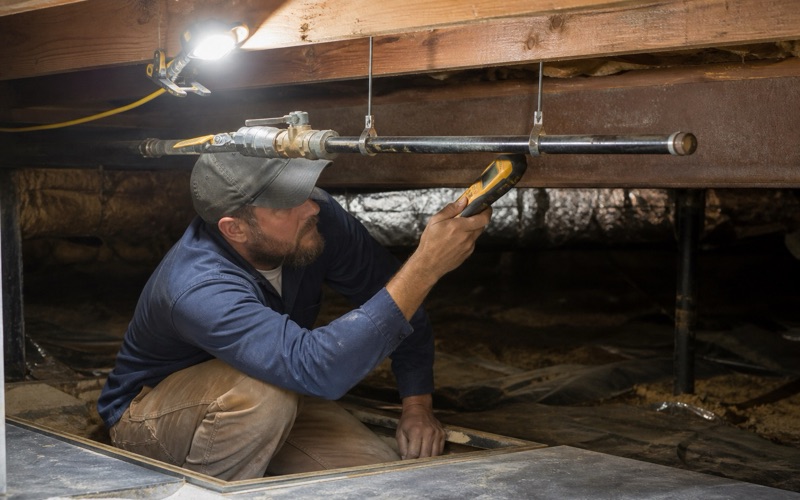
A soap bubble test finds a leak you already know the location of; it does not survey a house. We sweep the system with an electronic combustible gas detector, which reads concentrations well below what a nose registers and works on buried or concealed runs. Isolating the section first, then confirming with bubbles at the fitting, is far less destructive than opening walls.

Pilot Lights That Will Not Stay Lit

A pilot that keeps going out is usually reported as a bad thermocouple, and often it is something upstream instead. Low pressure at the appliance, a partly blocked line, a failing regulator or a missing sediment trap will all put out a pilot that is otherwise healthy. We read the pressure with a manometer before anyone sells you a part.

Appliance Relight After a Shutoff

After the gas has been off — for a repair, a red tag, a tripped seismic valve, or a move-in — every appliance in the building has to be relit and checked in turn. We relight water heaters, furnaces, wall heaters, ranges and dryers, verify the pressure each is receiving, and check for spillage at the draft hood. Once the work passes we arrange the utility appointment.

Carbon Monoxide From a Starved Appliance

Carbon monoxide is a combustion problem, and a gas supply problem becomes one. An appliance on inadequate pressure, or venting poorly because it is short of air, burns incompletely and produces CO where a correctly fed one would not. We check supply pressure and combustion together, because treating them as separate trades is how a line fault becomes a health hazard.

Red Tags and Yellow Tags on the Meter

When the gas company finds an unsafe condition it tags the meter and shuts off the supply — and the free visit that condemns your system does not repair it. A red tag means the appliance or line stays off until a licensed contractor corrects the fault and the work is signed off. We do the correction, arrange the re-light, and hand over the paperwork.

Tripped Earthquake Shutoff Valves

California requires seismic gas shutoff valves in defined circumstances under Health and Safety Code Section 19180, and a motion-sensitive valve built to ASCE 25-97 closes on ground movement whether or not anything is wrong with your piping. Most people never learn the valve exists until they have no gas and no obvious reason for it. We reset and test them, and tell a tripped seismic valve from a non-motion-sensitive excess flow shutoff.

Locating a Buried Yard Line Leak

A leak on a buried yard run does not need the yard dug up to find. We pressure-isolate the line to confirm the loss is underground, then trace the route — tracer wire over polyethylene, or direct location on steel — and narrow the fault to a short section before a shovel goes in. Excavating one meter of trench instead of thirty is the difference between a repair and a landscaping project.

New Gas Lines, Repipes and Replacement

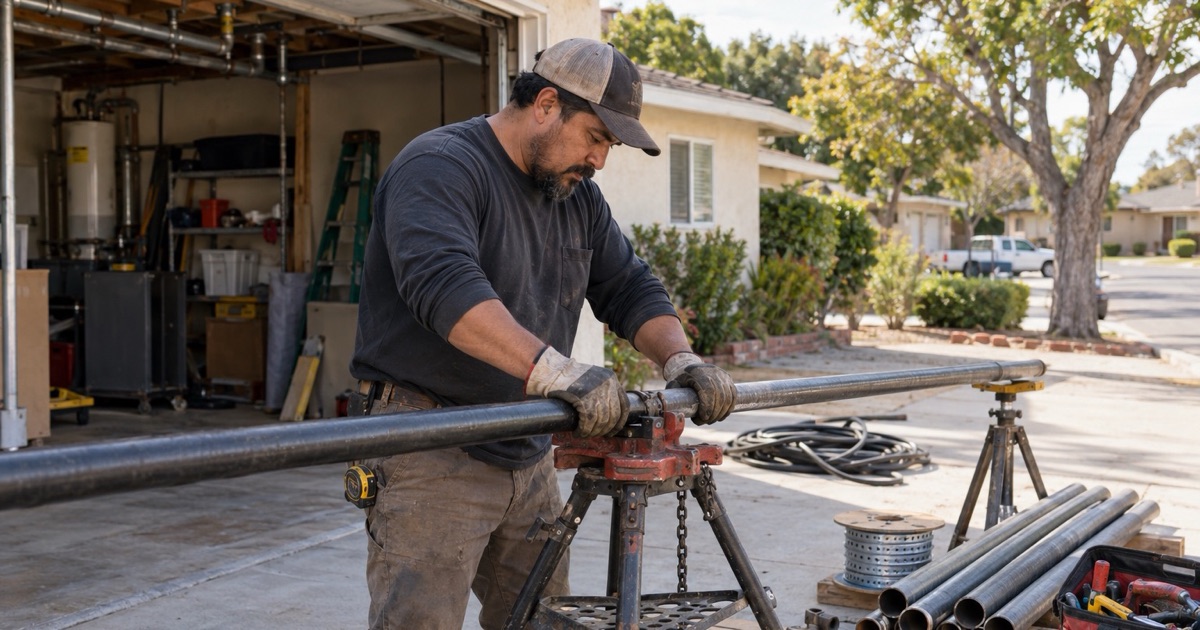
An installer working a length of new black steel pipe held in a pipe vise on a tripod stand

New Gas Line Runs to Unserved Rooms

Bringing gas to a room that never had it is a routing problem before it is a pipe problem: the run must reach the appliance, stay accessible where code requires, and land at a shutoff you can get to. We walk the route with you first, because the cheapest path and the one you want to live with differ.

Whole-House Repipes on Original Steel

When a house on its original steel piping starts producing leaks in more than one place, replacing the system beats chasing it. Threaded black steel corrodes from the inside and fails at joints and low points, so a second leak within a year of the first is a reliable signal that the rest is due. We size the new system to what the house runs now rather than what it ran in 1965.

Black Steel, CSST and Polyethylene Compared

Schedule 40 black steel is rigid, durable, and slow to install through a finished house. CSST listed to ANSI LC-1 and CSA 6.26 threads through framing far faster and needs a 6 AWG copper bonding conductor. Polyethylene in PE 2708 or PE 4710 is the underground material and cannot come above grade, which is what an anodeless riser is for.

Pipe Sizing by BTU Load

Pipe is sized by adding up the BTU demand of everything it feeds, then reading the length and pressure drop against a sizing table — not by matching whatever diameter is already there. This is the most common defect we find on additions: a new appliance teed off a branch with no capacity left, which starves everything on it. We calculate the load for the whole system, including what you intend to add later.

Line Extensions That Do Not Starve Existing Appliances

An extension is where a system quietly stops working properly. Adding an outlet to a line already at capacity does not fail visibly; the furnace and water heater just run short when the range is on. We check the headroom before extending, and upsize the trunk where the numbers require it.

Trenching a Yard Run and Restoring the Surface

An underground run is a trench, a bedded polyethylene line at depth, tracer wire above it so it can be found again, and a transition to steel where it surfaces. What people remember afterwards is the yard. We backfill and compact in layers so the trench does not settle into a scar, and put hardscape, turf and planting back as we found them.

Repair or Replace: How We Decide

One leak on an otherwise sound system is a repair. It changes when the line has already been repaired, when the failure is at a threaded joint rather than from an impact, or when the pipe is original to a house of this era. You get the finding and a fixed price against each option in writing.

Pressure Testing and the Written Result

A finished system is proved by isolating it, charging it to test pressure, and watching for a drop over a held period. Test pressures are read in inches of water column for low-pressure work and psi above that. We hand over the written result on every job, so you have evidence the system held.

Appliance, Outdoor and Amenity Hookups

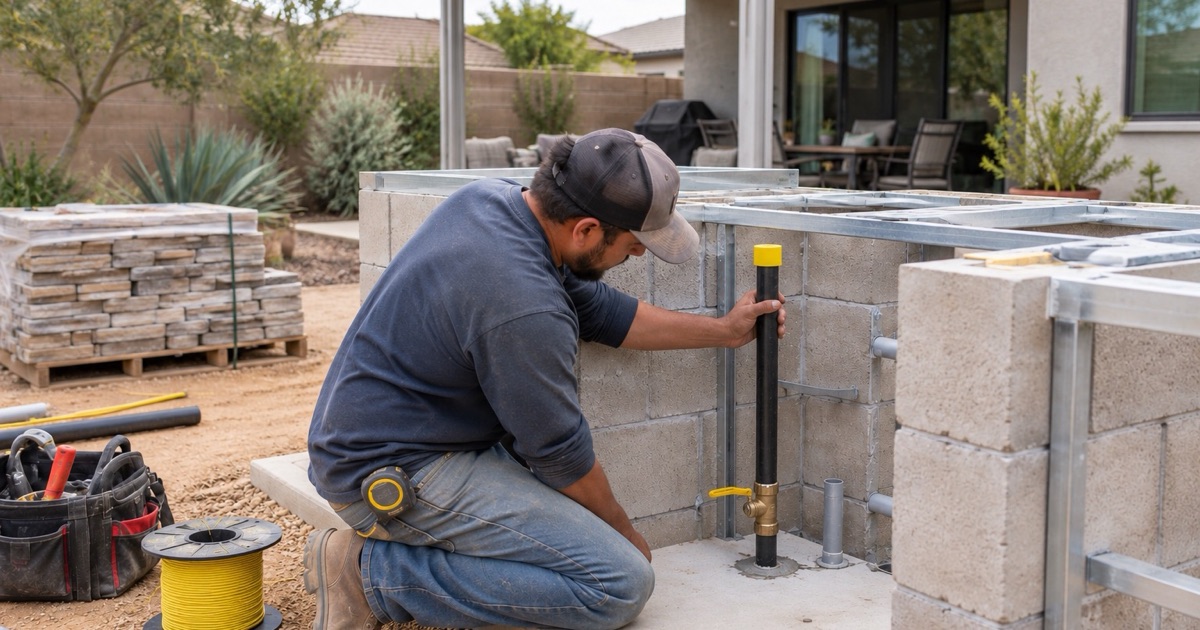
An installer setting the gas stub inside a partly built outdoor kitchen island

Electric-to-Gas Range and Cooktop Conversions

Putting a gas range where an electric one stood means a new branch to the kitchen, a shutoff behind the appliance, a sediment trap to catch debris before it reaches the burner orifices, and a flexible appliance connector rated for the job. The pipe is rarely the hard part; routing into a finished kitchen without opening more wall than necessary is. We plan that route before we quote.

Tankless Water Heater Supply Lines

A tankless unit fires at several times the input of the tank it replaces, and the line that fed the old heater usually cannot carry it. This is the most common reason a tankless install stalls on the day. We size and run the supply ahead of the swap so the appliance and the pipe arrive at the same standard.

Outdoor Kitchen and Built-In Barbecue Islands

A built-in island needs its supply sized for the burners, the side unit and anything else in the run, brought up inside the island in a material rated for exterior use, and terminated at an accessible shutoff. We coordinate with whoever builds the island so the stub comes up in the right place before the stone or stucco goes on.

Fire Pits, Fire Tables and Fire Bowls

A permanent gas feature beats a propane cylinder on convenience and on looks, and it is a fixed installation with an underground run, a buried line to the feature, and a shutoff clear of the flame. Whether it is a linear fire table, a round bowl or a low pit inside a seat wall, the pipe work is planned while the hardscape is still on paper.

Pool and Spa Heater Runs

A pool or spa heater is one of the largest single loads on a residential property, and it usually sits at the far end of the longest run — the two conditions that together produce an undersized supply. We size the line for the heater’s actual input over the real distance to the pad.

Wood-Burning Fireplace Conversions

Converting a wood-burning firebox to gas means bringing a line to the hearth, terminating at a shutoff the code requires you be able to reach, and matching the appliance or log set to the firebox and its venting. It is a common retrofit in houses of this age, where the masonry firebox is sound but nobody wants to burn wood in it.

Patio Heaters, Gas Lanterns and Quick-Disconnects

Southern California outdoor living runs most of the year, which makes a permanent outdoor supply worth more here than in a cold-winter market. A quick-disconnect outlet lets a patio heater or portable grill be plugged in and taken away without a cylinder; a gas lantern is a fixed low-load run. Both need weather-rated terminations and an accessible shutoff.

Standby Generator Fuel Supply

A whole-house standby generator adds one of the heaviest intermittent loads a residential system will ever see, and it has to run at full output at the same time as everything else in the house. That frequently exceeds the existing supply and sometimes the meter itself. We calculate the total load first, then tell you whether the answer is a larger line, a larger meter, or both.

Permits, Inspections and the SoCalGas Boundary

An installer checking houseline connections at a multi-unit gas meter bank

Where the Utility’s Pipe Ends and Yours Begins

SoCalGas maintains its piping up to and including the meter set assembly. Everything downstream — the houseline — is the property owner’s, and so is its repair, its permit and its contractor. Knowing which side of the service delivery point a fault sits on stops a customer paying for pipe the utility owns, or waiting on a utility for pipe it does not.

Curb-Set Meters and the Yard Run You Own

Where the meter sits at the curb rather than against the house, the customer-owned run is not a few feet of pipe — it is the entire distance from the sidewalk to the building, underground, and it is yours. On older lots here that is routinely the longest and most vulnerable section of the system, and the one most often assumed to belong to the gas company.

Santa Ana Gas Permits and What the Fee Covers

Gas work here is permitted through the city’s Planning and Building Agency, and the fee is modest against the job: permit issuance is $70.06 and a new gas system of one to four outlets is $56.64, so a residential permit comes to $126.70. We pull it, schedule the inspection, and show the fee on your quote.

The Inspection Sequence After Drywall

Gas piping is inspected in a defined order, and in this city the piping test is taken after lath or gypsum board is in place rather than before. That catches damage done by the drywall screws themselves, which an earlier test would miss. It also means the sequence has to be planned with the other trades.

Line Marking, 811, and What It Does Not Cover

An 811 DigAlert ticket brings the utilities out to mark their own facilities, and SoCalGas marks only as far as the meter. The customer-owned yard line — often the one running across where you intend to dig — is not on that ticket unless a private locate is arranged. We do that locate ourselves before excavating.

Meter Relocation and Upsizing

A meter is moved because a wall is coming down, an addition is going up, or the existing set no longer covers the load. It is upsized because the house has outgrown its supply — commonly after a tankless heater, pool heater or standby generator. Both are utility work, and we handle the houseline side and the sequencing with the gas company.

Gas Piping in Rental Property

Most of the housing in this city is rented, which puts gas piping in front of an inspection regime that owner-occupied property never meets. An inspector looks for unpermitted alterations, missing appliance shutoffs, unsupported or corroded pipe, and reused connectors. We survey ahead and correct what will be flagged, rather than meeting it in a report with a deadline.

Master-Metered Mobile Home Parks

A master-metered mobile home park has a split nobody expects: the park owner owns the distribution system feeding the individual meters, the resident owns the piping from their meter into the coach, and the system is overseen by the CPUC’s Safety and Enforcement Division rather than the city. That boundary decides who authorizes the work, who pays, and which authority signs it off.

Areas We Serve

Santa Ana Gas Line provides gas line throughout the greater Santa Ana area, with the same crews and the same standards on every job.

Good to know

Frequently Asked Questions

Do I need a permit to run or alter a gas line in Santa Ana?

Yes. Work that installs, extends, alters or replaces gas piping is permitted through the City of Santa Ana's Planning and Building Agency under the California Plumbing Code as the city adopts it. Permit issuance is $70.06 and a new gas system of one to four outlets is $56.64. We pull the permit and book the inspection as part of the job.

The gas company came out and shut off my gas. Will they repair it?

No. SoCalGas responds to a reported leak and makes the situation safe, which usually means shutting off supply and tagging the meter — but it does not repair customer-owned piping. Anything downstream of the meter is yours to fix through a licensed contractor. We do the repair and arrange the re-light once it passes.

Who owns the gas line between the meter and my house?

You do. SoCalGas maintains its piping up to and including the meter; everything after it is customer-owned, including the full run from a curbside meter back to the building. On older Santa Ana lots that underground yard run is often the longest section of the whole system.

How long does a typical gas line job take?

A single appliance line in an accessible space is usually a same-day job including the pressure test. A yard run that needs trenching typically takes one to two days plus the inspection. A whole-house repipe runs longer and can be staged so the household is not without gas overnight.

What does it cost to repair or replace a gas line?

It depends on the length of the run, whether it is buried or accessible, the pipe material, and how much has to be reinstated afterwards. We do not quote gas work over the phone, because a number given without seeing the route is a number that changes. You get a fixed written price after the walkthrough.

My pilot light keeps going out. Is that a gas line problem?

Often, yes. It is usually blamed on the thermocouple, but low supply pressure, a partly blocked line, a failing regulator or a missing sediment trap will all put a pilot out just as reliably. We read the pressure at the appliance with a manometer first, because a new part on a starved line does not fix it.

What is CSST, and is it better than black steel pipe?

Corrugated stainless steel tubing is a flexible gas line listed to ANSI LC-1 and CSA 6.26 that routes through a finished house much faster than rigid pipe. It is not universally better — it needs a 6 AWG copper bonding conductor and is not permitted in regulator vent piping. Which we use depends on the route and the code.

Do I need an earthquake gas shutoff valve?

California requires seismic gas shutoff valves in defined circumstances under Health and Safety Code Section 19180, and they are also fitted voluntarily. A motion-sensitive valve built to ASCE 25-97 closes on ground movement, so it can trip and leave you without gas when nothing is wrong with your piping. We install, reset and test them.

Can I install a gas line myself?

For anything beyond connecting an appliance to an existing outlet, no. Gas piping is licensed work in California, it requires a permit and an inspection, and an unpermitted alteration surfaces at resale or at an insurance claim. It is also the one trade where an undetected mistake does not stay small.

What happens if my gas work was never permitted?

It usually comes to light at a sale, a refinance, an insurance claim or a rental inspection, and by then it has a deadline attached. The route through is an inspection of what is there, correction of anything that fails code, and a permit that closes properly. We survey first and tell you the scope.

Ready to Get Started?

Request a free quote today and we'll get back to you fast.